
Your Career Is a Bet. Here's What It's Actually Betting On.
A single piece of fiction crashed the Dow 822 points. It exposed what professionals already fear: the problems their careers solve are graduating. Three moves to make before yours does.

The Deathbed Audit: What Your Calendar Says You Actually Worship
Your calendar is not a productivity tool. It is a moral document. It reveals what you actually worship. Here is the framework I built after being clinically dead for a day.

Why Smart Men Are Afraid to Try New Things at Work (And What It's Actually Costing Them)
Most of the fears running your career decisions right now aren't real risks. They're noise. The Fear Filter Reset is a free 5-minute framework that shows you exactly which fears are protecting you and which ones are holding you hostage. Download it free Fear Filter Reset and find out what's actually standing between you and your next move.
How to Protect Your Career in the Age of AI: Self-Advocacy, Adaptability, and the Domino Effect
AI is disrupting careers faster than most professionals can react. Learn how self-advocacy, strategic relationships, and mental adaptability are the only real protection in an era of relentless career disruption and transformation.

Marcus Aurelius Figured This Out in 170 AD. You're Still Catching Up.
We are all caught in a fast-moving current. How you navigate will predict your future.

The Seeing Eye vs. The Perceiving Eye: Musashi's 500-Year-Old Framework for Eliminating Mental Noise
Seeing vs Perception. The difference matters more than you know.

15 Minutes Exposed 3 Hours as a Lie. (This Applies to Your Career Too.)
15 minutes of brisk walking per day was associated with a 20% reduction in premature death. 3 hours of slow walking? 4%.
Volume lost to intensity by a factor of five.
But this video isn't really about walking.
It's about the fact that you're doing the exact same thing at your job. Logging ten hours. Answering every email. Sitting through seven meetings. Staying late. Measuring effort by time spent instead of value produced.
The Ancient Problem-Solving Hack That Makes Your Desk Look Stupid
Stop Thinking. Start Walking. (The Ancient Fix for Stuck Professionals)

The Productivity Payoff Nobody Talks About
You don't have a time problem. You have a presence problem. Here's what actually changes when you reclaim 10-15 hours a week.

The Two Brians
The future does not belong to the busiest employee. It belongs to the one who creates the most value with the least friction. Build that advantage now.

The One Thing: Why Most People Never Finish What Matters
Everybody wants success.
Very few people can stay with one thing long enough to let it compound.
The problem is not lack of ideas.
It is lack of sustained focus.
Shiny objects feel productive.
They are often just emotional escape.
Stop Wishing for a Better Boss. The Stoics Had a Better Plan.
Stop grinding harder and hoping for a better boss. Preferred indifference is the Stoic framework that separates what you can control from what you can't — and the Time Levr System turns that philosophy into 10–15 reclaimed hours per week. Learn how Stoic decision-making, AI tools, and ruthless prioritization create career leverage that promotions and raises can't ignore.

The Dog That Didn't Bark: Why Removal Is the Fastest Path to Leverage
Most professionals are losing 10 to 15 hours a week to silent repetition they've never questioned. Same emails typed from scratch. Same follow-ups written manually. Same documentation produced word by word. None of it loud. None of it urgent. Just a slow, invisible leak.
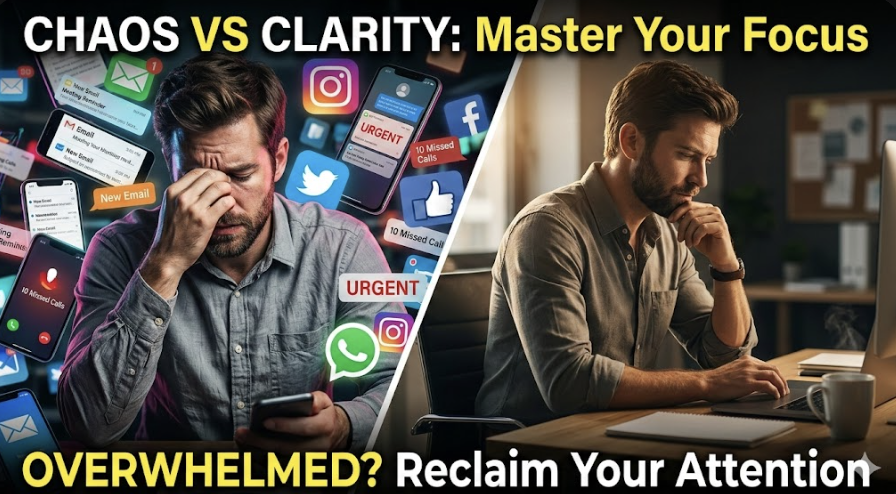
The Power of Now in an Age of Infinite Distraction
Discover why attention and presence are becoming the most valuable professional skills in the AI era and how high performers reclaim focus in a world of constant distraction.
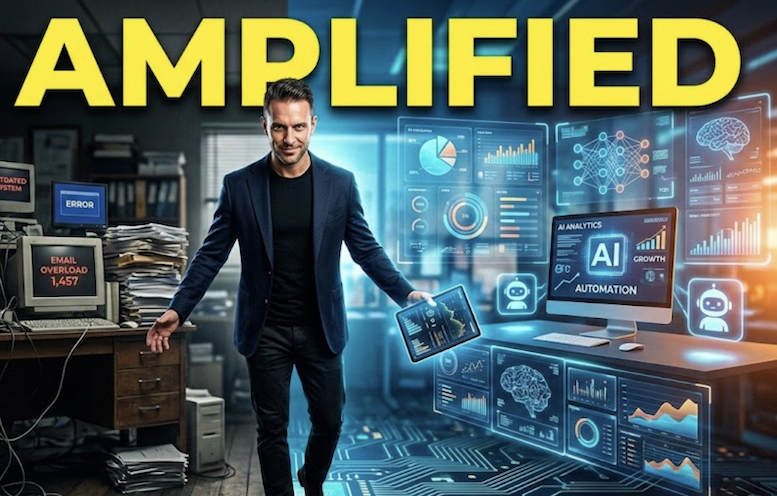
The AI-Augmented Professional
The Category of the Future
Now here’s where things get interesting.
The people who dominate new eras are almost never the ones who defend the old system.
They’re the ones who recognize the new category first.
Christopher Lochhead calls this category design.
Instead of competing inside an old model…
You create a new one.
Think about what just happened in the professional world.
The old model looked like this.
Experience.
Effort.
Hours worked.
Climbing the ladder.
The new model looks completely different.
Leverage.
Systems.
Technology.
Intellectual property.
One professional with the right tools can now outperform entire teams operating with outdated workflows.
That isn’t science fiction.
It’s happening quietly across industries right now.
The lawyers experimenting with AI research tools.
The physicians automating documentation.
The consultants building AI-assisted analysis systems.
The creators producing massive volumes of content using intelligent workflows.
These professionals are not working harder.
They are designing leverage.
And that is the defining advantage of the AI-augmented professional.
But there is something even deeper happening.
This shift is forcing people to upgrade their identity.
For decades the professional identity looked like this:
“I am the person who does the work.”
The new identity looks like this:
“I am the person who designs the system that produces the work.”
That shift is profound.
Because it turns effort into leverage.
And leverage compounds.
Once you build systems that multiply your thinking, your productivity stops being linear.
It becomes exponential.
One idea becomes ten outputs.
One hour becomes ten hours of impact.
One person becomes a force multiplier.
And this is exactly why so many professionals feel uncomfortable right now.
They can sense the ground shifting.
They know something big is happening.
But they’re not sure how to respond.
So they default to what feels safe.
More effort.
More hours.
More grinding.
But that instinct is exactly backwards.
Because the future does not belong to the busiest professionals.
It belongs to the most leveraged ones.
The ones who skate where the puck is going.
The ones who build systems instead of defending habits.
The ones who stop competing inside the old category and step into the new one.
The AI-augmented professional.
And the crazy part?
We’re still early.
Most professionals haven’t even started experimenting with these tools yet.
Which means the opportunity window is still wide open.
But it won’t stay open forever.
Every major technological shift creates a moment when early adopters build enormous advantage.
Then the rest of the world catches up.
Right now we are in that window.
And the question is simple.
Will you spend the next decade defending an outdated career model?
Or will you become the kind of professional the future actually rewards?
Because the professionals who learn to combine human judgment with technological leverage…
Will not just survive this transition.
They will dominate it.

Escaping the Crush of Circumstances: What Marcus Aurelius, Epictetus, and AI Can Teach Us About Reinventing Our Careers
Most professionals feel like they’re getting crushed right now.
The market is changing.
Technology is moving too fast.
Artificial intelligence is rewriting entire industries.
And it feels overwhelming.
But Marcus Aurelius had a very different perspective.
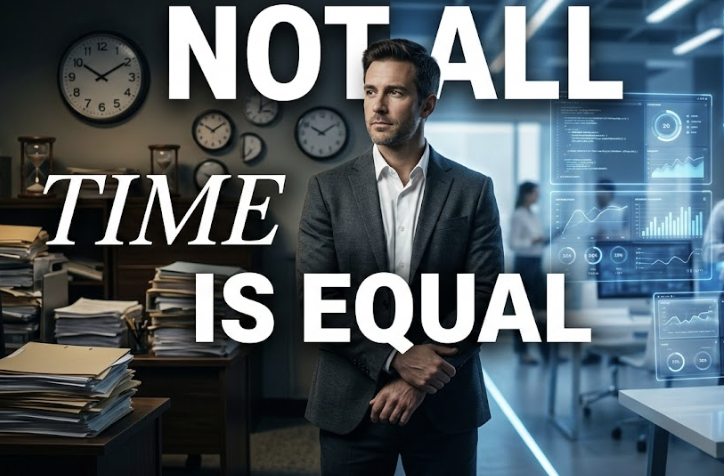

The Executive Career Is Quietly Dying. Most Professionals Haven’t Noticed Yet.
The traditional career model is changing fast. Learn why the old career ladder is breaking and how professionals can build leverage, productivity systems, and career resilience in the AI era.

Stop Treating Your AI Clone Like Fine China: Break It, Fix It, Build Something Better
Stop treating your clone like a fragile toy.